By: Julia Granato
“Trump Sees Dead People: Promises Crowd He’ll Bring Joe Paterno Back from the Grave”.
The crazy headlines we see in the news, like the one above, are always catching our eyes now a days, especially with our current President and the attention he draws. These headlines are delivered from both Democrats and Republicans. They even trickle into the news broadcasts with debates, political advocates, and even celebrities! The media acts as the fourth branch of government and serves a watchdog role, which means they have a responsibility to cover political controversy. And let’s be honest, it seems like all we ever hear about is political controversy. The article linked above explains how the media alerts the public to certain issues of concern to preserve democracy in our government.
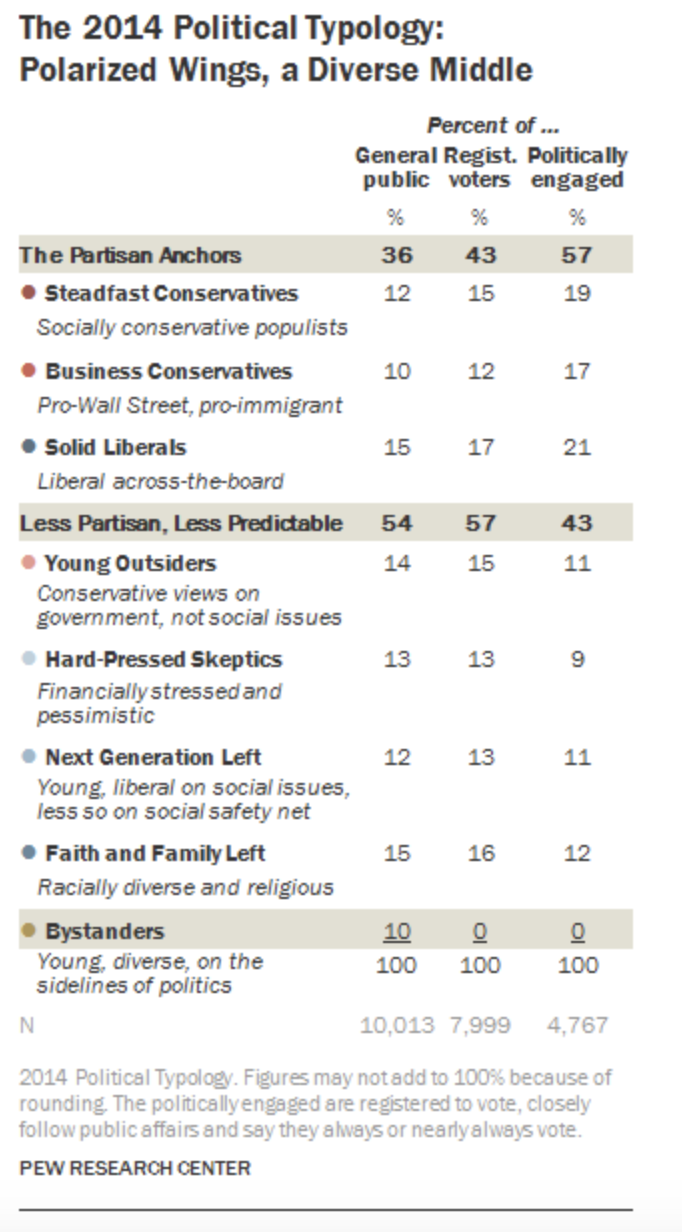
According to a PEW Research study in 2014, there are eight groups in politic typology ranging from “steadfast conservatives and business conservatives to solid liberals and young outsiders. The chart shows the different groups and their percentages of the general public, registered voters and who is politically engaged. All of these different groups are what cause the dissent and political polarization that we witness in the media.
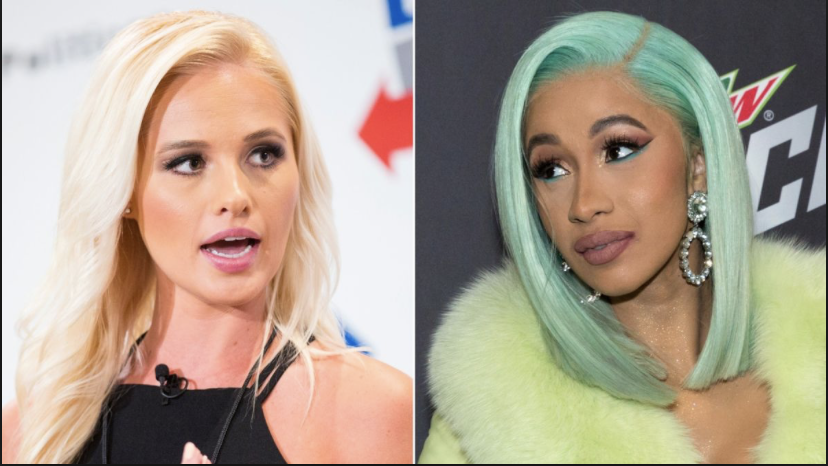
Cable television is perpetuating the political polarization, because we have better access to the reinforcement that aligns with our beliefs. With the elimination of the FCC’s fairness doctrine in the 1980s, the radio talks shows became more popular, where speakers would voice their personal opinions. This effect trickled into cable television as it became increasingly more popular, to create the beast that is politics of America. Some of the most prominent voices stand out because of opinion leaders, people who are well known and well trusted. One of the most recent run ins with politics and celebrities is with Cardi B and Tomi Lahren. Both who are well known celebrities with clearly feuding political opinions.
Sources:


You did a great job of tying in what we learned in class with this post. Speaking about watchdog journalism was interesting and fitting for the class. You used reliable sources to support your point of polarization through cable news. It would have been interesting if you had expanded more upon the Cardi B and Tomi Lahren dispute. I would have also liked to read about your experience with polarization to make the topic more easy to grasp. Also, while the title is catchy, I don’t feel like I understand very well how political polarization is “More Than Just Red vs. Blue.” From this post, I learned a possible reason for the 8 different political groups and about why polarization is relevant, but it is not clear how polarization is beyond political affiliation or “Red vs Blue.” All together this was very informative and reflected that class teachings well!
LikeLike