By Rachel Stanley

Black Panther was a crowd and critic favorite in 2018, earning a “certified fresh” ranking on rotten tomatoes, and earning over $700 million in domestic box office. Movie-goers quickly caught on to and applauded the political parallels found in the film relating to isolationism and race tensions in America.
“…Wakanda is the US, but also isn’t the US, but kind of is, but only in certain ways.”
Vox
Black Panther centers around the prosperous (and fictional) African country of Wakanda. Wakanda’s wealth stems from the massive and nearly exlusive supply of the element “vibranium” and careful security of the thriving communities in the country. Right away, we see a relevant parallel between the movie and real life. President Trump is a strong supporter of isolationism when it comes to immigrants or any potential harm to America, no matter how small the risk.
A 2017 study from the American Journal of Public health found that the idea of isolationism may seem beneficial, but can actually end up being detrimental to the public health of Americans.
In some of Black Panther’s final scenes, the king of Wakanda decides to reveal the country for the natural resource powerhouse that it is, and use that power to help people around the world. T’Challa’s change in heart shows that Americans can also be open-minded towards other viewpoints.
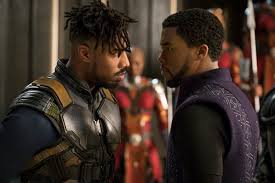
Another reason Wakanda has for expanding their reach is the racial tensions around the world, especially towards people of African descent in America. In the movie, King T’Challa’s uncle sees the treatment of African Americans, and makes it his mission to bring equality. Unfortunately, he goes a little too far and causes more harm than necessary.
We are currently working on these same issues in America and trying to find the most effective way to bring equal treatment of all races, but opposite sides of this debate make it difficult to make any real progress.
In the end, King T’Challa recognizes the importance of helping African Americans and other oppressed groups around the world. The New Yorker writes that this movie ending is a “challenge to American officials and institutions,” as well as to the fictional country of Wakanda.
Black Panther sets an example for America, but will America follow suit?
Sources:
Rotten Tomatoes
Box Office Record
Isolationism:
Nero Coughlin, C. coughlcn@wfu. ed., & Messenlehner, A. (2017). Isolationist Policies Threaten Public Health. American Journal of Public Health, 107(6), 860–861. https://doi-org.libproxy.furman.edu/10.2105/AJPH.2017.303779
Vox
The New Yorker
 Politics in Mass Media
I enjoyed the explanatory nature of this post, and it does a nice job of describing the political parallels in a way that even someone who hasn’t seen the movie can understand.The post could be made even more effective by adding a small segment about how these parallels are reflective of a more widespread trend in movies or TV shows today. Consider writing about your opinion on what these trends mean for the relationship of cinema and politics.
LikeLiked by 1 person